



“Start small. Start scared. Just start.”
Ah, January and a new year ahead. After a decade or so years of experience as a snowbird, I’ve learned that the weather in January can be cold, rainy and “iffy”!
Some of us bundle up in our fluffy bathrobes and head down to the pool for Water Aerobics, but not if the temperature is in the 50s.
I know I can count on January to have some less desirable days for outdoor activities, so this year, I invite you to explore the birth rite of your creativity and sign up for my watercolor class.
“Self-expression is a privilege each of us has, and when used, unites us with the energy of God as Creator.” Sr. Pat Willems, CSJ
I’m offering the lessons virtually free, but this year, I will need you to purchase your paints and brushes. Some things I can purchase easier in bulk, and so for the $10 fee, I will provide some paper, the palette etc. There are two levels of supplies I would recommend. And to determine which is a good fit for you, please plan to discuss this with me when you call to register. I’ll be offering separate classes for women and men.
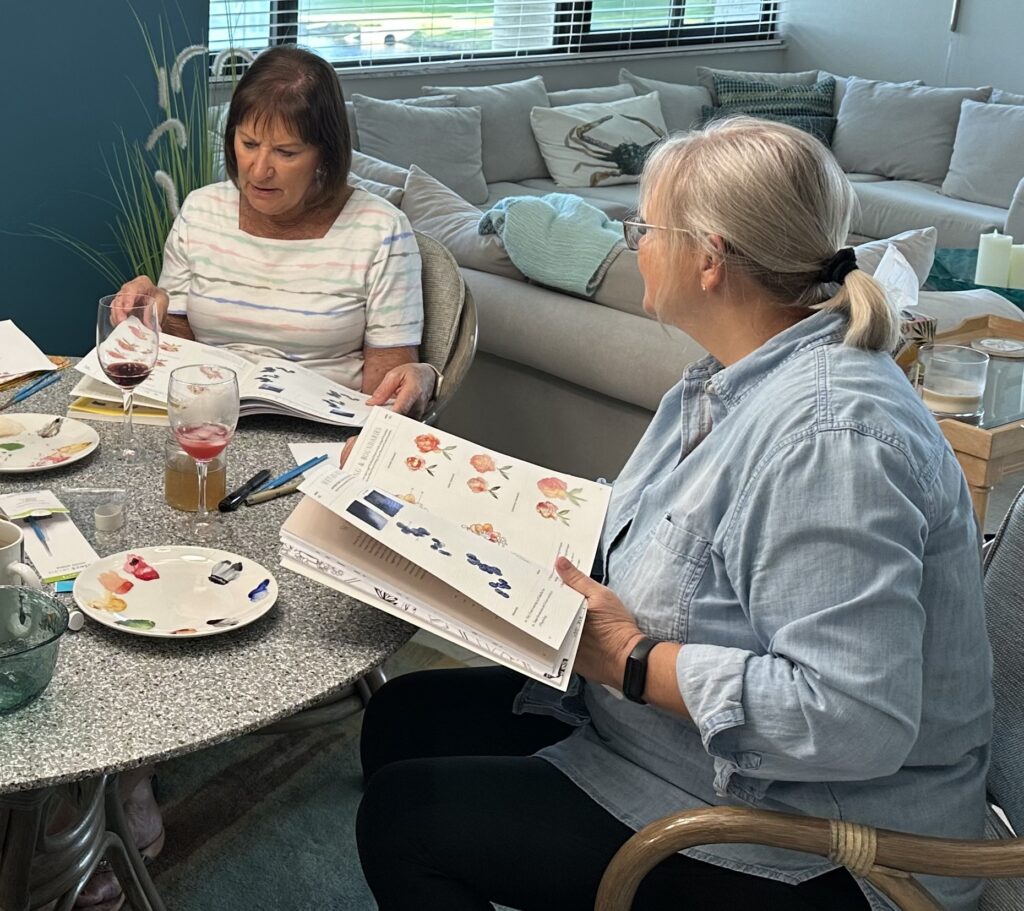
Please call to register: Carol Cummins, 630-862-1397; I can accommodate four at a time. Men’s Class: Monday, January 12, 2:30-4:00; Women’s Class: Wednesday, January 14, 2:30-4:00. Class Fee: $10. Supplies range from $35 to $42/$56/$79 or $111.80.
If there is interest to keep painting after the intro class, we may offer some follow-up classes and/or “expeditionary” classes, where we go outside and paint in paradise!
On November 11, I took a walk down to the Marina for some exercise with Linda Oleska. As we walked through the Wheelhouse parking lot, I noticed a beautiful coral colored seed pod and picked it up, marveling at the color of the seeds. We looked around to see where it came from and found a full seed pod growing on the
bushes between the cars. I hadn’t ever really paid attention to those bushes except for wishing they’d provide more shade for the cars!
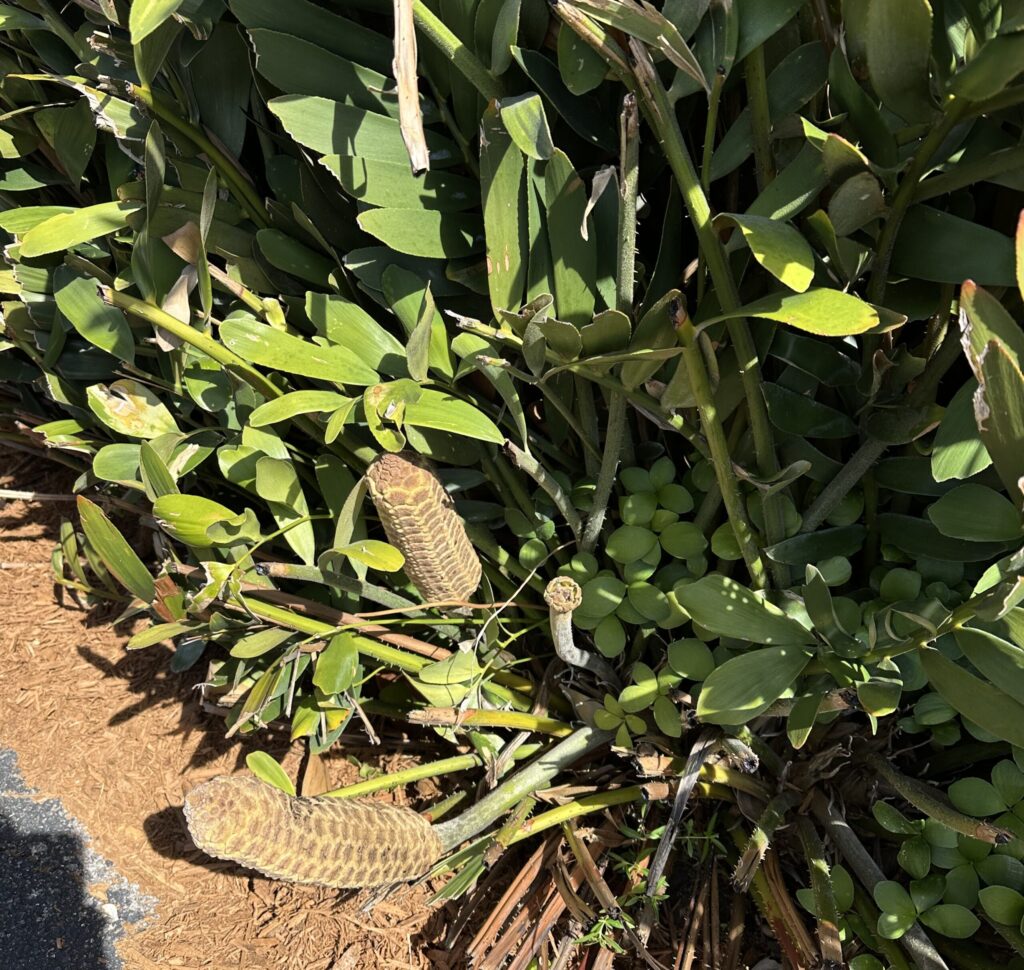
A quick look on my phone plant identification app didn’t really match the plant. I took the specimen that was lying on the ground back home with me to research further and found that it is called Zamia. It is a genus of cycad of the family Zamicaeae, native to North America, throughout the West Indies, Central America and South America as far south as Bolivia. The genus is considered to have originated 68.3 million years ago, according to Wikipedia.
Zamia is a very toxic plant! The primary toxin is Cycasin, a carcinogenic and neurotoxic glucoside. Turns out, I probably should not have touched it. When animals have eaten it, they get very, very sick.
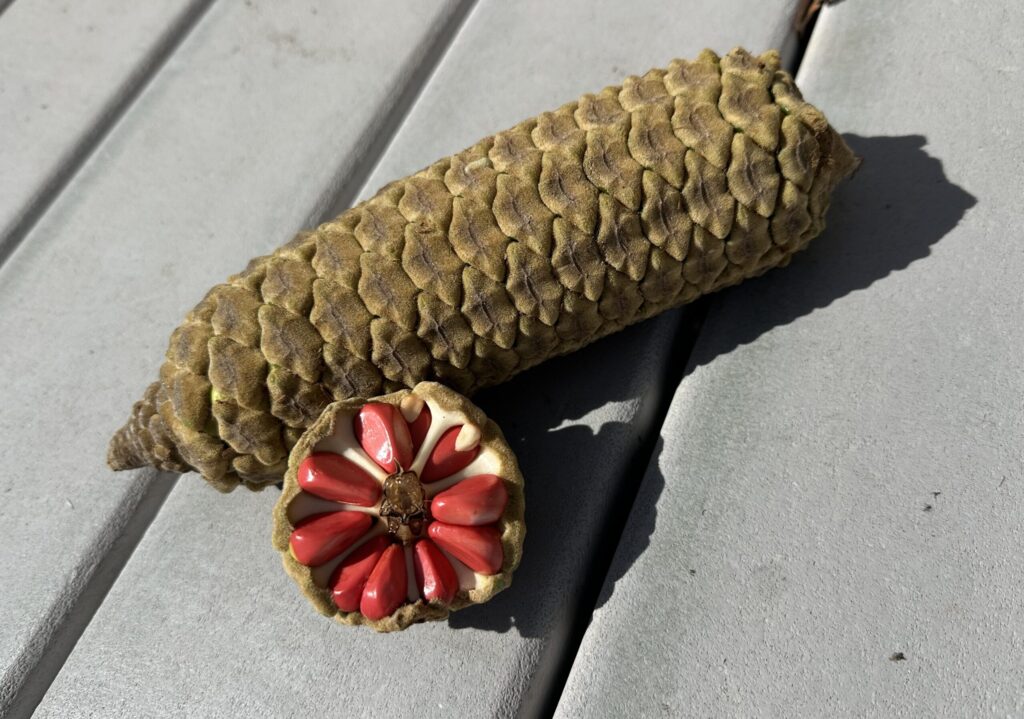
Many of these pods have been gathered to process the stem and/or seeds into starch, or for use in traditional medicine. Since almost the entire plant is very toxic, the starch is repeatedly washed to remove the toxins and make the starch edible.
Up until the 1980s scientists thought that the wind helped propagate the plant, but it was discovered that a specific beetle aids the propagation. The genus Cycad means that it does not flower. What a fascinating plant!
Cheers to the New Year, 2026!