

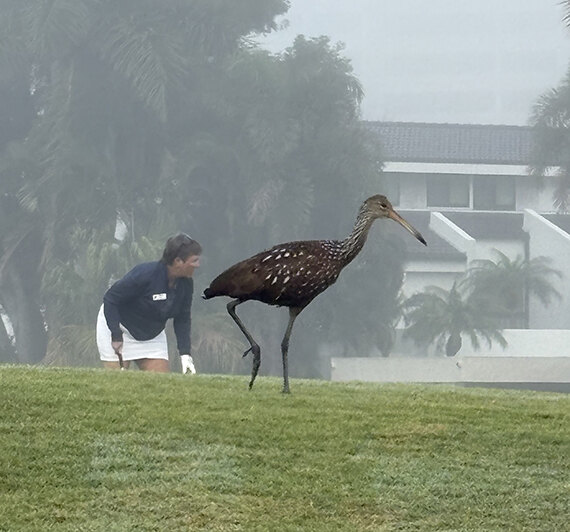
The limpkin couldn’t upset Mary Story’s concentration
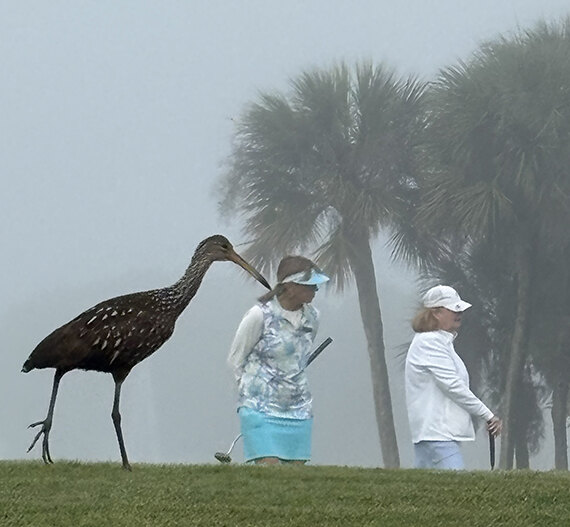
On a misty gray morning last March, my golf partner and I were standing near the 10th tee when a large, brown-speckled bird strutted confidently across the tee box as if it had the next tee time. Suddenly it let out an eerie, raucous wail. We immediately recognized the sound – it was the mysterious nighttime caller that had echoed through The Landings’ Villages for weeks.
My partner groaned. “What is that annoying bird? It’s been screeching outside my condo every night and keeping my guests awake. Isn’t there anything we can do to quiet them down – or get rid of them?”
I smiled to myself. Little did she know, this unusual bird was one of the most fascinating residents of The Landings. The culprit was a limpkin, a bird perfectly adapted to our ponds and wetlands and, in all likelihood, here to stay.
Many of us heard limpkins calling nearly every night in February and March, and often on cloudy days, as they foraged among the wetlands woven throughout The Landings. Their unmistakable cry – often described as krrr-eeeow! – is usually the male advertising his territory and trying to impress a mate. The sound is so hauntingly human that Hollywood has borrowed it for spooky sound effects, including the cry of the Hippogriff in Harry Potter and the Prisoner of Azkaban. Once you know that, it’s hard not to imagine magic lurking around the next pond.
They earned their name from their slightly awkward, waddling gait, which makes them appear to limp across uneven marshes. Don’t let the walk fool you, though. They’re surprisingly agile, equally at home wading through wetlands or climbing into trees to perch or nest.
As unusual as their voice is, their beak may be even more remarkable. Limpkins are among the world’s most specialized snail hunters. Their long, slightly twisted bill has a tiny gap near the tip and curves just enough to slip inside the opening of an apple snail’s shell. Like a pair of precision tweezers, it reaches in, slices the muscle attaching the snail to its shell, and extracts the entire meal intact. The next morning, their handiwork is often on display as neat piles of empty snail shells are scattered along pond edges.
If you’ve visited nearby Six Mile Cypress Slough Preserve, you’ve probably noticed bright bubblegum-pink clusters attached to cypress trunks and vegetation. Those are the egg masses of apple snails – the limpkin’s favorite food and one reason these birds thrive in Southwest Florida.
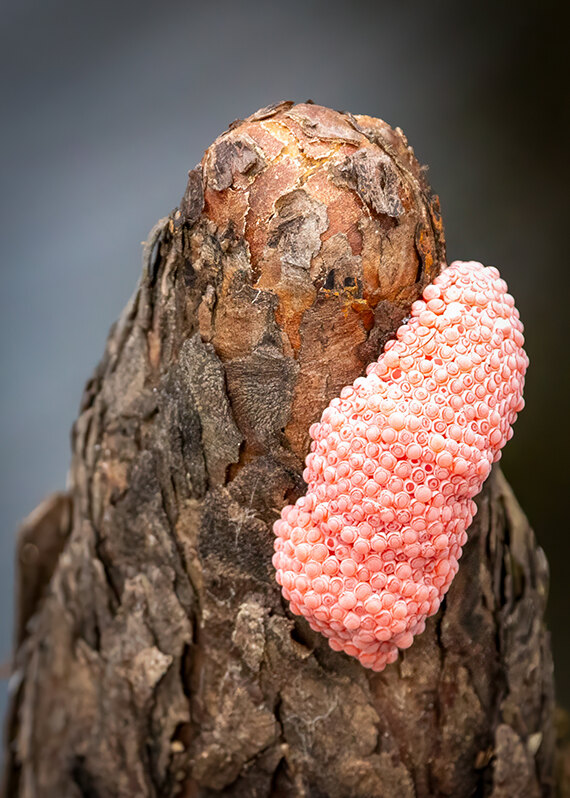
Historically, limpkins were found mainly in Florida’s freshwater wetlands. But during the past two decades, the introduction of invasive Island apple snails and Chinese mystery snails has provided an abundant new food source, allowing limpkins to expand dramatically beyond their traditional range. Birders now regularly report them as far north as Ohio, Michigan, and southern Ontario.
The drought that affected southern Florida over the past year may also have helped the birds. Lower water levels concentrated snails in shallow areas, creating a buffet for these skilled foragers. The unusually low water in many of The Landings’ ponds likely produced ideal feeding conditions.
Limpkins breed whenever water levels and food supplies are favorable, rather than following a strict calendar. Most pairs raise one brood each year, laying four to eight blotchy, buff-colored eggs in platform nests woven from reeds and sticks. The nests are tucked into cattails, dense marsh vegetation, shrubs, or even low trees. Although a pair may hatch several chicks, fewer than half survive their first year, making every successful nesting season important.
Despite sounding like visitors from another world, limpkins are year-round residents. They do not migrate and typically remain within the same territory for years. They are protected under the U.S. Fish and Wildlife Service’s Migratory Bird Treaty Act of 1918, meaning they cannot be hunted or trapped, and their nests and eggs cannot legally be disturbed.
So the next time you hear that unforgettable midnight wail drifting across the ponds, you can still wish it were a little quieter. But perhaps you’ll also appreciate that you’re listening to one of North America’s most unusual birds – a snail-hunting specialist with a beak like a surgical instrument, a voice worthy of a Hollywood monster, and a touch of wildness that reminds us our community is part of a much larger natural world.